
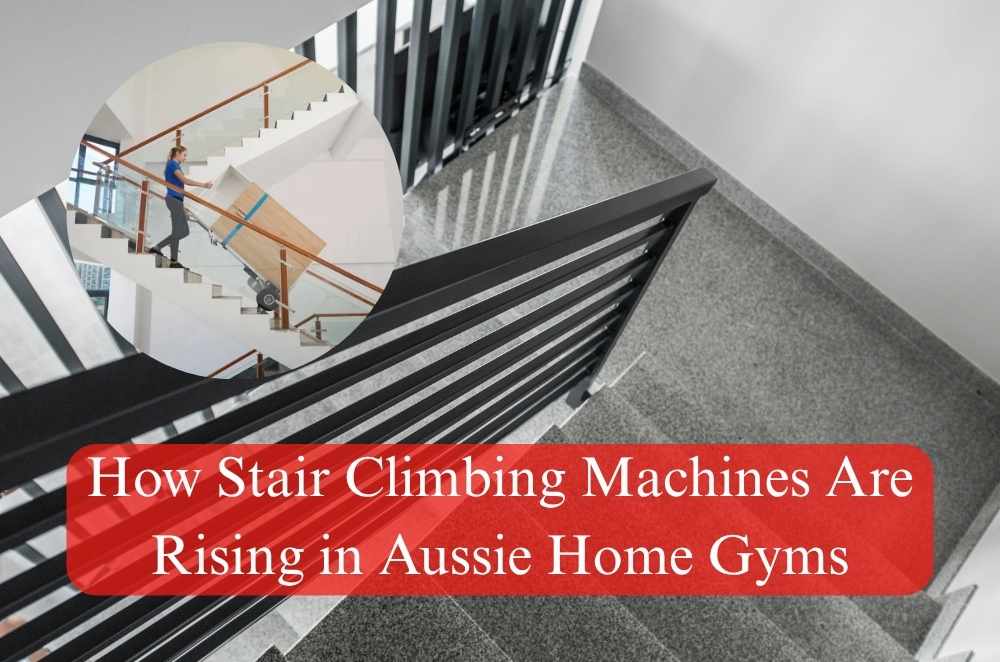
If you’ve ever watched two people try to drag a fridge up a narrow stairwell with a basic hand truck, you know exactly how quickly a “quick move” can turn awful. To be blunt, stairs and heavy gear don’t mix well without the right kit. That’s why more people are looking at hiring a dedicated trolley for stairs instead of gambling with whatever’s lying around in the shed.
This guide walks through what stair climber trolleys actually do, when hiring is worth the money, what costs to expect, and the safety basics you don’t want to learn the hard way.
What makes a stair climber trolley different
On the surface, a stair climber looks like a beefed-up hand trolley. Same general shape. Same idea. But the details matter.
Most stair climber trolleys use:
Triple-wheel clusters or tracks that “walk” along each step
A reinforced frame built to carry tall, heavy loads without twisting
Handles that give you leverage while keeping your spine more neutral
On powered models, a motor and battery are used to drive the climb instead of your lower back
If you’re comparing what’s out there, it helps to look at a few common configurations first (manual vs powered, different wheel/track setups, and load styles). For a quick reference point, you can start with https://stairclimbers.com.au/ to see the kinds of stair-capable trolleys and setups people typically consider before hiring.
I remember helping a mate shift his elderly mum’s washing machine up an old timber staircase. The first attempt was with a standard trolley. Two steps in, the machine started to lean, my foot got jammed, and we bailed out fast. We went back the next day with a hired stair climber, took five extra minutes to strap and balance the load, and it felt like a completely different job. Same staircase, same machine. Less drama.
When stair climber trolley hire is actually worth it
You don’t need a stair climber for every move. But there are some red flags where it stops being optional and starts looking like cheap insurance, similar to how stair climber home equipment becomes essential once you understand the risks.
It’s usually worth hiring one when:
There are multiple flights of stairs and no lift
You’re moving tall or top-heavy items that could crush or pin someone
The building is older, tight or a bit dodgy underfoot
The item can’t be pulled apart into smaller, safer pieces
One strata manager I worked with started insisting on stair-friendly gear for any move involving big appliances above the ground floor. Not a formal rule, just a “strong suggestion”. Within a few months, they’d quietly cut down on dented stair noses, chipped walls and cranky neighbours complaining about blocked landings. No glossy policy, just better tools.
Understanding hire costs and what’s really included
Stair climber trolley hire will almost always cost more than grabbing a basic hand trolley, and that catches people off guard. But you’re hiring an engineer, not just a bit of bent metal with wheels.
When you’re comparing options, look beyond the high bold price:
Hire period – Day rate, half-day, weekend bundle or multi-day discount?
Pick-up vs delivery – Delivery can save you mucking around if you don’t have a ute or van.
Bond or security deposit – Often higher for powered units and specialist gear.
Damage and cleaning clauses – Check what happens if wheels, frames or batteries come back in rough shape.
I’ve seen a small business owner try to save money by using two staff and a basic trolley to shift heavy printers upstairs. One slip, one damaged unit, and a bruised shin later, the “saving” looked pretty flimsy compared with hiring a stair-ready trolley for a day.
Safety basics you can’t skip on the stairs
A stair climber trolley doesn’t magically make a risky move safe. It just gives you better odds, especially when you’re working within manual handling safety regulations in NSW that expect you to control the load, not fight it.
Keep the load stable and as close to the body as practical
Avoid twisting while under load
Plan the route before you start
Use enough people for the task
On the stairs specifically:
Do a slow walk-through first – Look for loose carpet, narrow turns, low ceilings, dodgy edges.
Know the rating – Don’t guess; stay under the trolley’s safe working load.
Balance the item – Strap it tightly, keep the centre of gravity close to the frame.
Nominate a leader – One person calls the moves; everyone else listens.
For powered stair climbers, add a few more checks:
Confirm the battery is charged before you leave the depot
Test the controls on flat ground and then on one or two steps
Avoid sudden jerks on the controls mid-stair; slow and steady is the rule
On one office move, we stopped a job halfway through because the stairwell lighting was awful, and one tread was chipped out. The client thought we were being dramatic. We waited until daylight, brought an extra spotter, taped the worst edge, and finished without incident. A bit embarrassing in the moment, but better than explaining a fall to WorkSafe.
Choosing the right gear mix for your move
A stair climber trolley is one piece of the puzzle, not the whole kit. The smart approach is to match gear to each part of the journey – from the vehicle to the front door, through the hall, up the stairs and into the final room.
A quick planning checklist before hire helps:
What are the three heaviest items, in kilos, if you can estimate?
How many steps, and are there turns or landings?
Is there any lift access for part of the route?
How many reasonably fit adults will actually turn up to help?
One tradie I know now refuses to start a big residential move until they’ve walked the entire path with a tape measure and a coffee. It sounds over the top, but after losing half a Sunday stuck in an L-shaped stairwell with a commercial fridge, they decided “measure twice, move once” was cheaper than improvising.
Final thoughts
Stair climber trolley hire sits in that awkward category of “nice to have” until you’ve done one heavy move on stairs without it. After that, it usually shifts into “non-negotiable”. The right trolley for stairs — especially when used alongside stair climbing devices for older adults can turn a sketchy, gut-clenching carry into a controlled, step-by-step job where everyone walks away tired but uninjured. If your move involves serious weight plus stairs – townhouses, walk-ups, older office blocks – it’s worth treating the job like the high-risk task it actually is. Take ten minutes to map the route, think through worst-case scenarios, and decide which gear combination will give you control rather than just hope.






Write a comment ...